
The best shop power tool batteries & chargers keep your tools ready and crews moving.
Picture this: you start a deck build at dawn and your saw dies before lunch. The charger is slow. A couple of packs run hot. And now the crew waits while time and money leak away. I have been there. The fix is simple but key. Choose the right shop power tool batteries & chargers for how you work. Match pack size to task, pick a charger that fits your day, and set a plan to rotate. Do that, and you cut downtime to near zero. Your tools feel new again, and your jobs flow.
[3-product-listings-blocks]
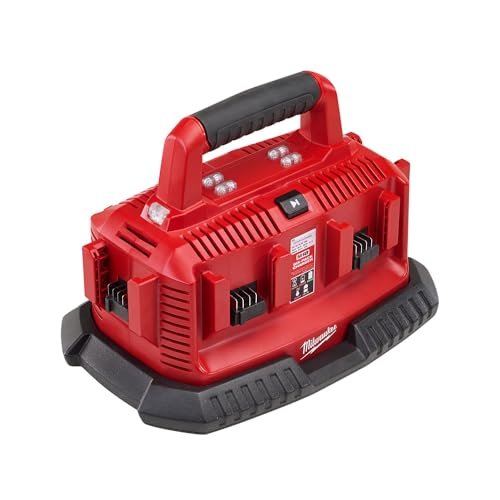
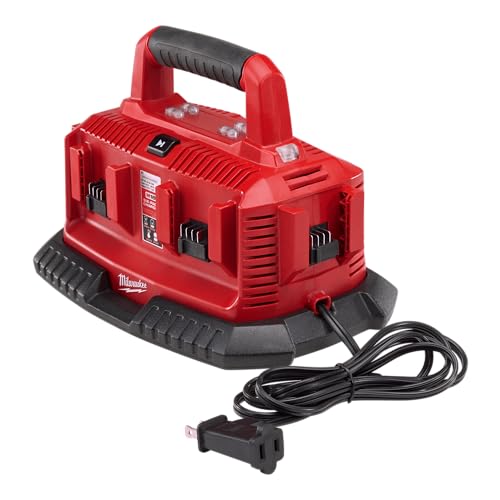
Milwaukee M18 Six-Pack Sequential Charger
shop power tool batteries & chargers
This six-bay unit is built for crews who live on M18 tools. It charges up to six packs in sequence, so you can dock everything and get back to work. The layout is simple, the LEDs are clear, and the carry handle feels stout. It cuts outlet clutter in the shop and in the trailer.
Charge management protects your packs if they are hot or cold. It will wait, then resume when the pack is safe. The shell is tough and holds up to dust and bumps. If you use 5.0Ah to 12.0Ah M18 batteries, this is a neat central hub.
Pros:
- Six-bay design reduces outlet sprawl and cord chaos
- Sequential logic that protects pack health in real use
- Clear status LEDs that are easy to read across a bench
- Carry handle and mounting slots suit shop or jobsite
- Solid build that shrugs off dust and daily bumps
- Great for rotation of mixed Ah packs through the day
- Tidy footprint versus running many single chargers
Cons:
- Sequential, not simultaneous, so one-at-a-time charging
- Larger and heavier than a dual-port unit
- M18 only; no M12 support and no USB ports
My Recommendation
If your core tools sit in the M18 line, this is a smart buy. It shines in a shop where packs return to base in waves. Dock them, forget them, and pull fresh packs as lights go green. For carpenters, remodelers, and facility crews, it keeps the day smooth.
People who want the fastest top-off on one or two packs may want a rapid dual charger instead. But teams who juggle many packs value the drop-and-go flow here. In the world of shop power tool batteries & chargers, it hits the sweet spot of capacity, safety, and ease.
| Best for | Why |
|---|---|
| Multi-crew shops | Six docks in one spot; simple rotation and fewer outlets |
| Daily M18 users | Protects pack life with smart, sequential charge control |
| Wall-mounted stations | Mount slots and handle make a tidy, fixed charging hub |
Why your charger and batteries matter more than you think
I learned early that power is a system. The tool, the pack, and the charger work as one. Change one, and the whole feel shifts. Buy the right shop power tool batteries & chargers, and your drill feels stronger, your saw stays cool, and your shift runs long. Choose poorly, and you fight sag, heat, and wait time.
The charger sets your pace
- Single-port chargers are fine for solo users. Dock a pack and move on.
- Dual-port chargers help when you swap between two key tools.
- Multi-bay chargers shine in a shop. They cut cord mess and load balance your packs.
- Rapid chargers push more amps. They cut wait time. They also add heat. Heat ages cells.
Here is the trick I use. Match your charger speed to your battery size and your day. If you run 6.0Ah or bigger packs in bursts, a rapid charger makes sense. If you run 2.0Ah or 3.0Ah packs and you have time, a standard charger is gentler.
Amp-hours, watt-hours, and real runtime
Amp-hours (Ah) tells you capacity at a set voltage. Watt-hours (Wh) tells you total energy. Many brands print Ah. Multiply Ah by nominal voltage to get Wh. More Wh means more cuts or holes per charge. But weight goes up. I aim for a balance. On drills and drivers, I like 4.0Ah to 5.0Ah. On saws, I grab 6.0Ah to 12.0Ah.
Here is a simple way to choose packs:
- Light tasks, high reach: 2.0Ah to 3.0Ah for less weight.
- All-day drilling and driving: 4.0Ah to 5.0Ah for long run time.
- Cutting and grinding: 6.0Ah to 12.0Ah for peak draw and torque.
Chemistry and cell size
Most packs today use 18650 or 21700 cells. The 21700 cell trend grew fast by 2026. These cells hold more energy and run cooler at the same load. High output packs often use 21700 cells plus better heat paths. That is why the same tool feels stronger with “high output” packs. The cells stay in their sweet spot.
Smart charging and pack health
Modern chargers talk to the pack. They check temp and voltage. If a pack is too hot or cold, they pause. That saves the cells. Some chargers add a “recovery” phase for deeply drained packs. This can bring a pack back when older chargers will not.
I treat the charger like a caretaker. A good one charges fast, but does not fry packs. A great one charges fast, cool, and safe. The Milwaukee six-pack does this well. It is not rapid on all bays at once. It is sane. That helps pack life.
Sequential versus simultaneous charging
This topic causes confusion. Sequential means the charger fills one pack at a time. It then moves to the next bay. Simultaneous means it splits power to charge multiple packs at once.
Which is best? That depends. If you need two packs ready now, simultaneous helps. If you manage a pool of packs, sequential keeps heat down and simplifies flow. In a shop rack, sequential is clean. shop power tool batteries & chargers is better for a steady rhythm than for a crisis.
Voltage families and cross-compatibility
Pick a brand and stick with it. Most brands lock packs to their tools. M18 packs fit M18 tools. 20V Max packs fit 20V Max tools. Adapters exist, but they can void warranties and add risk. I only use the pack made for the tool. That way I know the pack and tool can share data and heat limits. shop power tool batteries & chargers also keeps the pack secure.
Cold weather and hot shops
Temperature is the silent killer. Cold packs have higher resistance. They sag and charge slow. Hot packs age fast. Here is how I manage it.
- In winter: Bring packs inside the truck cab. Keep them near room temp before use. Let them warm before charging.
- In summer: Charge in shade, with air space. Do not stack packs tight. A small fan near the station helps.
- Never charge below freezing or above the rated temp. The charger will often block it anyway.
Storage tips for long life
I store packs about half full if I will not use them for a while. I check them every month or two. I top them off if they drop too low. I keep contacts clean and dry. I use a soft brush to remove dust. I never tape over the vents. Packs need to breathe. For my shop power tool batteries & chargers, I made a wall rack. It holds chargers high and packs in a neat row. Less clutter means fewer drops.
Safety first, always
Lithium-ion is safe when used right. Use the OEM charger. Do not bypass vents. Do not open packs. If a pack swells or smells sweet or burnt, recycle it. Have a Class D or lithium-rated fire kit in the shop. Never charge on a pile of rags. I like to charge on a metal shelf or a ceramic tile. shop power tool batteries & chargers is cheap insurance.
What to look for in a charger in 2026
By 2026, I look for a few smart touches. These add real value.
- Thermal logic: The charger must manage hot and cold packs.
- Clear LEDs or a small screen: I want clear status at a glance.
- Mounting options: Keyholes save space.
- Cord wrap: You would be surprised how handy this is.
- Serviceable build: Tough case, real strain relief, quality fan if present.
- Ecosystem fit: It should match the packs you trust and use.
On some brands, higher-end chargers add USB-C PD. They can charge a phone or a laser with fast speed. Nice perk for a bench setup. The Milwaukee six-pack is pure job charger. No USB. That is fine for many shops.
How I test chargers and packs
People ask how I judge shop power tool batteries & chargers. I keep it simple and fair.
- I run a set task. For drills, I use a step bit in sheet steel. For saws, I rip 2×10. I time cuts and count holes.
- I check pack temp with a simple IR gun before and after.
- I log charge time from low to full. I note when the LEDs step up.
- I track how the tool feels. Sag, stall, or strong.
- I watch how the charger handles hot packs. Does it pause or push?
- I check noise. A loud fan is annoying in a small shop.
Over weeks, patterns emerge. Good packs run cool and strong. Good chargers protect and move on. The Milwaukee unit has been steady in this regard. It does not rush. It does not cook packs.
Milwaukee M18 ecosystem notes
If you are new to M18, here is a quick take. The line is broad. Drills, impacts, lights, fans, vacs, and saws. High output packs give the most punch on saws and big grinders. Standard XC packs are great for drills and drivers. The six-pack charger plays nice with both. Dock them all. Pull what you need.
Who should choose multi-bay chargers
- Shops with a pool of tools.
- Crews who share packs across tasks.
- Facilities that set and forget overnight.
- Hobbyists with a growing M18 fleet who want tidy storage.
Who should skip them
- Solo users with two packs.
- People who need two packs full at the same time and fast.
- Pros who mix M12 and M18 on one bench and want one unit for both.
Care myths I hear often
- “Leave packs on the charger forever.” I do not. Most chargers stop, but I dock only when I need to.
- “Rapid charging kills packs.” Not if designed well and used in limits. Heat is the enemy, not speed alone.
- “Run packs to zero every time.” No. Lithium-ion does not need full drain cycles. Shallow cycles are fine.
- “Any adapter is safe.” I avoid adapters. I trust the OEM system.
Signs you need to upgrade your charger
- It runs very hot.
- It takes far longer than spec.
- It fails to start with warm packs.
- It has frayed cords or dim LEDs.
- It cannot keep up with your day.
If you see two or more of these, it is time. The charger is a low-cost way to boost uptime. In the world of shop power tool batteries & chargers, shop power tool batteries & chargers may be the highest ROI item you buy this year.
Budget planning for a shop power setup
I budget with a simple rule. One charger port for every two active packs. One spare pack per high-draw tool. That mix keeps the line moving. If I have six daily-use M18 packs, a six-bay charger fits well. If I have three key tools in constant use, I plan one extra pack per tool. You can scale up or down, but this gives a calm flow.
Environment and recycling
Packs will age out. Plan for that. Use brand take-back or a certified recycler. Keep dead packs out of the trash. Tape the terminals before you drop them off. Most home centers host bins now. shop power tool batteries & chargers takes a minute and keeps people safe.
Transport tips for mobile crews
- Use a pack case or a crate with dividers.
- Keep pads between packs to avoid contact rub.
- Avoid hot dashboards.
- Lock the crate so packs do not bounce.
- Label packs by age or Ah to rotate smart.
Troubleshooting a stubborn pack
If a pack “won’t take a charge,” try this:
- Let it cool to room temp.
- Dock it and wait. Some chargers trickle to wake a low pack.
- Clean the contacts with a dry, soft cloth.
- Try a different charger bay.
If it still fails, mark it and recycle it. Do not pry or poke. The cells can vent if abused. It is not worth the risk.
Brand ecosystems to compare
I keep an eye on the big names: Milwaukee M18, DeWalt 20V Max, Makita 18V LXT and XGT, Bosch 18V, and Ryobi 18V One+. Each line has strengths. Milwaukee’s M18 platform has breadth and many high output options. DeWalt offers dual-port and four-port chargers with rapid modes. Makita has smart cooling and 40V XGT for high draw tools. Bosch has coolpack tech. Ryobi gives value and wide DIY coverage.
The reason I mention this is simple. The charger choice lives inside your brand world. If your fleet is M18, the Milwaukee six-pack is a natural. If your fleet is mixed, consider separate stations by brand. Your shop will run cleaner. Your packs will last longer.
How to design a charging wall
I like a clean wall rack for shop power tool batteries & chargers. Here is a plan that works.
- Mount a plywood backer to studs.
- Add a surge-protected power strip with enough headroom.
- Mount the six-pack at eye level.
- Add hooks for cords and two shelves for spare packs.
- Add labels for Ah and user initials if packs are shared.
- Hang a small fan if the space gets hot.
Ten minutes of setup saves hours over a year. It also looks pro when clients walk through.
Real-world run-time management
People love to ask, “How many cuts per charge?” It varies by wood, blade, and pressure. I focus on repeatable workflow instead. I set a rotation:
- One pack in tool, one cooling, one on deck.
- When the tool slows, swap and dock.
- Keep a steady trickle through the six bays.
With this, even hard days feel smooth. I do fewer emergency stops. The six-pack charger helps me keep the chain of packs moving.
When to choose rapid charging
Use rapid charging when:
- You have limited packs and high demand.
- You can cool packs with a fan between use and charge.
- You need fast top-offs at lunch.
Avoid rapid charging when:
- Packs are hot from a long cut. Let them cool first.
- You will leave packs on the charger all night. A standard unit is fine.
You can mix. Some shops run a rapid dual-port for mid-day and a multi-bay standard for the long game. That combo covers both speed and pack care.
Why sequential can be better than it sounds
Sequential sounds slow. It is not in a steady shop. You dock six packs. The first one starts at once. By the time you drain your next tool pack, the charger has moved on. You pull one, place one, and repeat. Heat stays low. Packs live longer. Your rack stays clean. That is how the Milwaukee M18 six-bay wins in practice.
Common mistakes that cut battery life
- Charging hot packs right away.
- Storing packs fully empty for months.
- Blocking vents with dust or tape.
- Using off-brand chargers to save a buck.
- Dropping packs into wet sawdust or water.
Fix these and your packs can last years. The savings stack up fast.
A quick note on warranty and service
Check your brand’s terms. Many packs have two or three-year coverage in 2026. Chargers often have one to three years. Keep receipts. Register if asked. If a charger fails early, contact support. Do not open the case. Most brands service or replace units that fail in normal use.
Ergonomics and bench flow
Little things add up. I keep the charger handle clear. I do not stack packs on top. I leave space for airflow. I place a small bin for spent packs. I keep a brush nearby to knock off dust. These habits protect both the charger and the packs.
How many packs do you really need?
For a typical two-person crew on M18:
- Two 5.0Ah packs per drill/driver set.
- Two high output packs for saws and grinders.
- One spare shared pack as a buffer.
That is five to seven total. A six-bay charger fits that count well. For a solo user, three to four packs and a dual or multi-bay is enough. Scale to your work.
Pricing and value in 2026
In 2026, tool prices shift, but one thing holds. Downtime costs more than gear. A good charger costs less than one lost hour on site. A good pack costs less than one call-back. When you shop power tool batteries & chargers, think total cost. Include time saved, life gained, and jobs won. That is how pros buy.
Environmental conditions to avoid
- Direct sun on the charger.
- Damp basements with no airflow.
- Dust storms in the shop.
- Stacking heavy tools on docked packs.
Protection you can add
- A simple dust cover when idle.
- A surge protector to tame spikes.
- A timer plug if you want auto-shutoff habits.
- A label maker for bays and packs.
None of these are musts. But they help keep things neat and safe.
What about “condition” modes?
Some older chemistries liked deep cycle “condition” modes. Modern lithium packs do not need this. Your charger may run a balance phase. That is normal. It is not the old “recondition” meaning. Trust the pack and charger logic. Do not try to outsmart it with strange routines.
Working with apprentices or new hires
Train them on the station. Show them how to dock a warm pack and wait for the LED pattern. Show them how to read the lights. Make it simple. A one-page sign helps. It keeps the day smooth and reduces pack abuse.
Decoding LED patterns
Not all chargers use the same lights. But most share a core set:
- Flashing: charging.
- Solid: charged.
- Fast flash or alternating: error or temp block.
- No light: not seated, bad contact, or dead pack.
If a bay shows error, try cleaning the contacts. Try another bay. If it repeats, tag the pack.
Fleet tracking and labels
In a busy shop, label packs by number and Ah. Add a small dot for year. I keep a simple log. It takes seconds. It helps spot early failures and plan buys. A neat station looks pro. It also boosts morale. People work better when tools are ready and in place.
Final thoughts on the Milwaukee M18 six-bay
I like gear that gets out of my way. This charger does that. It is not flashy. It is not an app toy. It docks, protects, and fills. It does it all day, every day. For heavy M18 users, that is what counts.
FAQs Of shop power tool batteries & chargers
How many batteries should I own for a small shop?
Two to four packs per core voltage works for most. If you run saws hard, add one high output pack.
Is rapid charging bad for battery life?
Not by itself. Heat is the issue. Let hot packs cool. Use quality chargers. You will be fine.
Can I use one brand’s charger for another brand’s batteries?
No. Use the charger made for your packs. It is safer and protects the cells.
What is better: sequential or simultaneous charging?
For steady shop flow, sequential is great. For urgent top-offs on two packs, simultaneous helps.
How should I store batteries long term?
Store near half charge. Keep them cool and dry. Check and top off every month or two.
Final Verdict: Which Should You Buy?
If your fleet is M18, the Milwaukee six-bay is a clean, tough hub that keeps work flowing. It shines for shops that rotate many packs through the day.
For solo users, a dual rapid may be enough. But when you shop power tool batteries & chargers for a team, this six-bay unit delivers order, safety, and uptime.