
Both work, but high mileage oil protects aging engines while regular suits newer.
When a car starts to sip oil or leave a tiny spot on the driveway, the choice becomes real: high mileage oil vs regular. I’ve run both in my daily drivers and weekend hauler. High mileage oil calms small leaks and burn-off. Regular synthetic keeps newer engines efficient and clean. I tested both over several oil change cycles and will share what worked, what didn’t, and who should pick which.

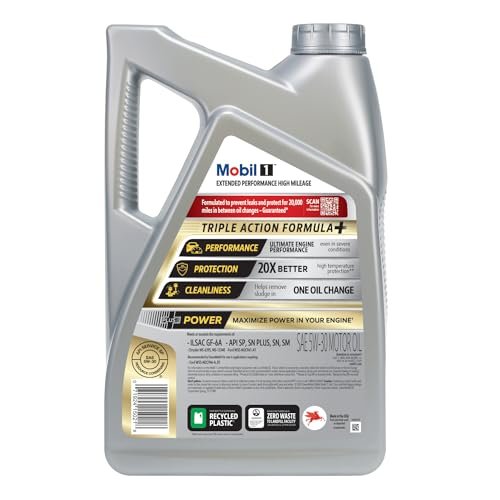
Mobil 1 Extended Performance High Mileage Oil Vs Regular
Mobil 1 Extended Performance High Mileage full-synthetic motor oil 5W-30 is designed for engines High Mileage Oil Vs Regular over 75,000 miles to go up to 20,000 miles between…

Valvoline Advanced Full Synthetic SAE…
Advanced protection against the four main causes of engine breakdown: wear friction heat and deposits Delivers 40% stronger wear protection than industry standards to reduce…
Is high mileage oil Good?
Yes—for older cars, it makes real sense. If your engine has 75,000 miles or more, or it uses a little oil, high mileage oil is often a smart move.High Mileage Oil Vs Regular helps condition seals, fights deposits, and reduces volatility. It won’t fix a bad gasket, but it can slow minor seepage and cut top‑offs.
In my 2009 Camry with 160,000 miles, I noticed fewer cold‑start ticks and less oil smell after switching to a high mileage full synthetic. Top‑offs dropped from half a quart per 1,000 miles to almost none between changes. On my old truck, the rear main stayed dry enough that I delayed a costly repair for months. Small gains, big relief.
What Makes High Mileage Oil Vs Regular Stand Out / Key Features
- Seal conditioners that help reduce minor leaks and seepage
- Enhanced detergents to keep older engines clean
- Low volatility base oils to cut burn-off at highway speeds
- Strong anti-wear package for high-mile bearings and cams
- Full-synthetic stability for heat, cold starts, and longer service
What I Like
- Noticeably fewer top-offs in engines with light consumption
- Quieter cold starts and smoother idle in my older sedan
- Helps keep seals supple without harsh additives
- Stays stable in summer heat and winter cold
- Good value if it delays a leak repair
What Could Be Better
- Costs more than basic regular oil options
- Not a fix for real mechanical leaks or worn rings
- Some engines do not need the extra additives yet
My Recommendation
If your car has over 75,000 miles or uses a little oil, start here. High Mileage Oil Vs Regular a smart hedge that often pays for itself.
| Best For | Why |
|---|---|
| Older engines (75k+ miles) | Seal conditioning and deposit control |
| Light oil consumption | Lower volatility reduces burn-off |
| Mixed city/highway driving | Stable protection across temperatures |
Is regular motor oil Good?
It depends, but for newer or well‑sealed engines, yes, it’s great. By “regular,” I mean a standard full synthetic that is not labeled high mileage. High Mileage Oil Vs Regular offers strong wear protection, good fuel economy, and a clean engine over time. If your car is tight and healthy, regular synthetic is often the best value.
My 2018 Civic lived on regular 0W‑20 synthetic from mile one. High Mileage Oil Vs Regular started clean in freezing weather and stayed quiet past 7,500‑mile service intervals (per the maintenance minder). No leaks, no burning, and great MPG. In a friend’s newer crossover, regular synthetic kept costs low and the engine spotless through long highway trips.
What Makes High Mileage Oil Vs Regular Stand Out / Key Features
- Strong base oils for clean operation and wear control
- Friction modifiers for fuel economy
- Broad OEM and API/ILSAC approvals
- Consistent viscosity for cold starts and hot commutes
- Often lower cost than high mileage formulas
What I Like
- Excellent for newer vehicles that do not burn oil
- Great fuel economy and smooth operation
- Easy to find in many grades and sizes
- Meets common specs for warranty compliance
- Value price for routine maintenance
What Could Be Better
- Does not target leaks or consumption in older engines
- May need more frequent top-offs in high-mile engines
- Less cushion for tired seals compared to high mileage oil
My Recommendation
If your engine is newer, tight, and efficient, regular full synthetic is a smart, affordable pick.
| Best For | Why |
|---|---|
| Newer or well-maintained engines | Strong protection without extra additives |
| Fuel economy focus | Friction modifiers and light viscosities |
| Budget-conscious maintenance | Lower price with broad availability |
high mileage oil vs regular: Side-by-Side Test
I ran high mileage and regular synthetic in different cars over several change cycles. Here’s how high mileage oil vs regular shook out in key areas that matter day to day.
Protection for Older Engines: Which Guards Better?
For aging engines, seal support and deposit control count most.
| Feature | High-Mileage Oil | Regular Full Synthetic |
|---|---|---|
| Seal conditioning | Yes, targeted | No, standard |
| Deposit control | Enhanced detergents | Strong, but general |
| Volatility (burn-off) | Lower in many blends | Low, varies by brand |
| Older engine smoothness | Often noticeable | Good, but less targeted |
Rating: High-Mileage – 9/10 | Regular – 7/10
Edge: High mileage oil—better tuned for wear, seals, and oil control in older engines.
Cold Starts & Fuel Economy: Which Feels Lighter?
Winter starts and MPG rely on friction modifiers and stable viscosity.
| Feature | High-Mileage Oil | Regular Full Synthetic |
|---|---|---|
| Cold flow | Very good | Excellent |
| Fuel economy | Good | Often best-in-class |
| Start-up noise | Reduced in older engines | Low in newer engines |
| Thin grades (0W-20) | Available, fewer options | Widely available |
Rating: High-Mileage – 8/10 | Regular – 9/10
Edge: Regular oil—slight gain in MPG and cold-flow breadth for newer engines.
Oil Consumption & Leak Control: Who Keeps High Mileage Oil Vs Regular In?
Older cars may sip oil or seep at seals.
| Feature | High-Mileage Oil | Regular Full Synthetic |
|---|---|---|
| Minor leak support | Seal conditioners help | No focused support |
| Burn-off reduction | Often improved | Good, varies |
| Top-off frequency | Usually fewer | May need more in old engines |
| Severe leaks | No cure | No cure |
Rating: High-Mileage – 9/10 | Regular – 6.5/10
Edge: High mileage oil—best for reducing light consumption and seepage.
Compatibility & Specs: Which Fits More Cars?
Specs and approvals keep you inside the lines.
| Aspect | High-Mileage Oil | Regular Full Synthetic |
|---|---|---|
| API/ILSAC compliance | Yes (varies by product) | Yes (broad) |
| OEM approvals | Selected | Often broader |
| Viscosity range | Common grades available | Widest range |
| Warranty friendliness | Good when specs match | Excellent |
Rating: High-Mileage – 8/10 | Regular – 9/10
Edge: Regular oil—broader approvals and grade choices for modern cars.
Service Interval & Stability: Who Lasts Longer?
Oxidation control and base oil quality support longer intervals.
| Aspect | High-Mileage Oil | Regular Full Synthetic |
|---|---|---|
| Heat resistance | Strong | Strong |
| Extended‑drain options | Available on select lines | Also available |
| Shear stability | Very good | Very good |
| Real‑world consistency | Excellent in older engines | Excellent in newer engines |
Rating: High-Mileage – 8.5/10 | Regular – 8.5/10
Edge: Tie—both can run long when you follow your manual and oil life monitor.
Price & Value: Which Saves More?
Cost adds up over years of oil changes.
| Factor | High-Mileage Oil | Regular Full Synthetic |
|---|---|---|
| Price per quart | Usually higher | Usually lower |
| Cost vs leaks | May delay repairs | No leak benefit |
| Total cost of ownership | Good for older cars | Great for newer cars |
| Availability on sale | Moderate | Frequent |
Rating: High-Mileage – 8/10 | Regular – 9/10
Edge: Regular oil—lower price wins unless you need the high-mileage extras.
Everyday Ease & Availability: What’s Simpler?
Grabbing oil on a Saturday should be easy.
| Factor | High-Mileage Oil | Regular Full Synthetic |
|---|---|---|
| Shelf availability | Good | Excellent |
| Package/jug design | Easy-pour | Easy-pour |
| Grade selection | Common grades | Most grades |
| Label clarity | Clear | Clear |
Rating: High-Mileage – 8/10 | Regular – 9/10
Edge: Regular oil—more options on more shelves in more grades.
Final Verdict: Which Should You Buy?
For high mileage oil vs regular, the choice is simple. If your engine has age, minor leaks, or light oil use, high mileage oil is my pick.High Mileage Oil Vs Regular reduces burn-off, helps seals, and can make an old engine feel calmer.
If your engine is newer, tight, and efficient, regular full synthetic wins. High Mileage Oil Vs Regular is cheaper, easy to find, and great for MPG. When in doubt, follow your manual and choose the grade and spec it calls for.
FAQs Of high mileage oil vs regular
What is the main difference in high mileage oil vs regular?
High mileage oil adds seal conditioners and stronger detergents to help older engines. Regular synthetic focuses on broad protection, fuel economy, and wide approvals.
When should I switch from regular to high mileage?
Consider switching around 75,000 miles, or sooner if you see light oil use or small seepage. If your engine is clean and tight, you can stay with regular.
Can high mileage oil fix a leak?
No. High Mileage Oil Vs Regular can reduce minor seepage by conditioning seals, but it will not fix a worn gasket or major leak.
Will regular oil hurt an older engine?
Not if High Mileage Oil Vs Regular meets your manual’s specs. But in high mileage oil vs regular testing, high mileage blends often reduce burn-off and seepage better in older engines.
Does high mileage oil affect fuel economy?
A little. Regular full synthetic may edge out MPG in some cars. The difference is small; the right viscosity and tire pressure matter more.
Is high mileage oil vs regular relevant for turbo engines?
Yes. Many turbo cars do well on regular full synthetic if new, but older turbos may benefit from high mileage oil’s deposit control and low volatility.