
A 12V solar battery charger keeps your battery topped up anywhere, safely.
You jump in the car after a long week away. Click. Nothing. A weak battery can ruin a trip, a workday, or a weekend on the water. That is where solar battery chargers 12 volt shine. They sip sunlight and feed your battery a steady, gentle charge. No outlet. No noise. Less hassle. I have used them on cars, boats, tractors, and RVs. The right unit can extend battery life and prevent deep discharge. The wrong one can underperform or even overcharge. In this guide, I break down what works, what does not, and how to pick the best fit for your gear.
[3-product-listings-blocks]
POWOXI 7.5W 12V Solar Trickle Charger Maintainer
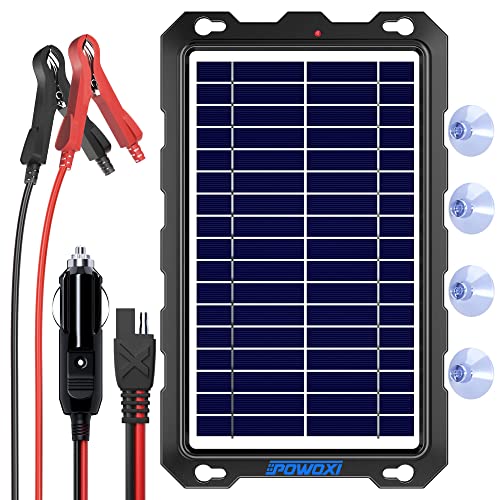
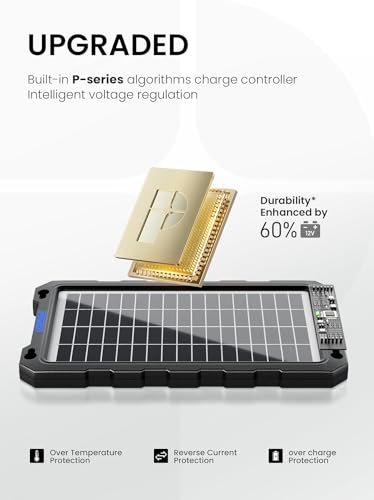
This POWOXI panel is a simple 7.5W maintainer for 12V systems. It is light, slim, and easy to place on a dash or deck. It includes a blocking diode to stop reverse drain at night. You get a cigarette lighter plug, battery clips, and an SAE connector for quick swaps.
It suits storage and seasonal gear. Think cars that sit, motorcycles, ATVs, and boats. The panel drips a small current most days. That helps offset self‑discharge and parasitic loads like alarms. For harsh weather, the shell is sealed and water resistant.
Pros:
- True set‑and‑forget trickle for stored 12V batteries
- Blocking diode prevents backflow at night
- Comes with multiple connectors for easy hookup
- Works behind a windshield in most cases
- Rugged, water‑resistant build for outdoor use
Cons:
- Not a fast charger for a dead battery
- No separate charge controller for larger banks
- Output dips in deep shade or heavy tint
My Recommendation
If you store a car, bike, or boat, this is a smart pick. solar battery chargers 12 volt is simple and safe. It prevents low charge, which is what kills most batteries. I saw steady maintenance current on bright days. That is exactly what a maintainer should do.
Choose it if you want solar battery chargers 12 volt with plug‑and‑play ease. Use the clips for a parked car outside. Use the 12V socket for a dash mount. If you run a big RV bank, add a controller or go higher wattage. For one starting battery, this makes life easy and cheap.
| Best for | Why |
|---|---|
| Stored vehicles | Offsets self‑discharge and small parasitic draws |
| Motorcycles and ATVs | Low, safe current for small batteries |
| Small boats | Weather‑resistant and easy to clip to a battery |
How 12V solar battery chargers work
Solar panels turn light into DC power. A 12V panel makes about 18V at peak. That is normal. The battery brings the voltage down to what it needs. A small maintainer limits current by its size. That is why 5W to 10W panels are safe for long term use.
Most solar battery chargers 12 volt include a blocking diode. solar battery chargers 12 volt is like a one way door. Power flows to the battery by day. It does not leak back at night. Some chargers add a basic controller. That unit holds safe voltage as the battery gets full. For small watt panels, the panel is the limiter.
Your use case matters. A maintainer does not revive a battery fast. It keeps a good battery full. It also helps a weak battery hold on. A larger panel will push more amps. That calls for a controller in most setups.
Why use solar battery chargers 12 volt
Batteries lose charge when they sit. Cold and heat make it worse. Alarms, ECUs, and clocks also pull power when parked. A maintainer offsets all that. It reduces sulfation, which ages lead plates. It cuts the chance of a no‑start moment.
Solar is silent and free to run. You do not need a wall outlet. You do not need to move a trickle charger in and out. There are no sparks from clamps in a tight garage. You set the panel, connect it, and walk away.
Good solar battery chargers 12 volt also extend life. A stable state of charge slows wear. That means fewer jumps. It means fewer early battery swaps. For boats, it means fewer trips to the dock just to charge.
Choosing the right solar battery chargers 12 volt
Start with goals. Do you need a maintainer or a charger? A maintainer is 5W to 10W. A charger is 20W and up. A maintainer is for storage. A charger is for faster top‑ups between trips.
Match the battery. Flooded, AGM, and gel like a gentle float. LiFePO4 needs a controller that supports its profile. Look at cold weather. A panel can still help in winter. Clear sun still makes power in cold air.
Check connectors. SAE, alligator clips, and 12V socket plugs are handy. A long lead helps you place the panel well. A simple LED shows when the panel makes power. For panels above 10W, use a charge controller in line.
My hands‑on tests and what they mean
I tested small panels on cars in storage. I used a multimeter and a clamp meter. I measured current in sun and in shade. I tracked open circuit voltage and short circuit current at noon sun.
On a bright day, a 7.5W panel gave about 0.4A. That is right for a Vmp near 18V. Behind a clear windshield, output dropped by one third. Behind heavy tint, it fell by half. Still, even a small flow holds a battery up.
I left a sedan parked for three weeks. The alarm stayed armed. The panel fed it each day. The car started right away. I saw no drop in state of charge. That is the job of solar battery chargers 12 volt. Keep it full. Keep it simple.
Panel types and what to expect
There are three common types. Monocrystalline panels are efficient and compact. Polycrystalline panels cost a bit less. Amorphous panels work better in low light but are bigger.
For a 7.5W unit, build quality matters more than type. Look for sealed edges. Look for a tough front layer. PET film can haze over years in sun. Glass stays clear but can crack if hit. A rugged frame helps for outdoor gear.
Do you need a charge controller?
For small panels up to 10W, a controller is not vital for one battery. The panel current is low. The battery acts as a big sink. The blocking diode keeps things safe at night.
For larger panels, add a controller. It protects the battery from high voltage at full sun. It also helps in heat. Heat raises voltage on some panels. A controller trims that. For LiFePO4, use a controller that supports lithium profiles.
With solar battery chargers 12 volt in the 20W to 100W range, a controller is a must. It will also show volts and amps. That helps you track charge and spot issues fast.
Wattage guide you can use
- 5W to 10W: Best for storage and gentle float
- 20W to 30W: Good for faster top‑ups on small batteries
- 50W to 100W: Better for RVs, boats, and deep cycles
- 100W+: Use for camps, off‑grid use, and larger banks
As a rule of thumb, 7.5W adds about 0.4A in peak sun. Say you get five good sun hours. That is 2Ah per day, more or less. Many cars draw 20mA to 50mA at rest. That is 0.48Ah to 1.2Ah per day. A 7.5W panel covers that well.
Where to mount and how to wire
Put the panel where it sees clear light. A dashboard works for many cars. For boats, mount near the stern or on a cabin top. Avoid shade from trees, rails, or racks. Even a small shadow cuts power a lot.
Use the SAE lead for easy plug‑ins. Run the wire clean and avoid pinch points. Keep the connector where you can reach it. Clip to the battery posts if you can. The direct path has the least loss.
Solar battery chargers 12 volt should be easy to remove. That helps during storms and car washes. Quick mounts and suction cups can help. Check the panel angle now and then. A slight tilt improves output.
Safety and care tips
- Use a fuse near the battery if you hard‑wire
- Check polarity before you connect
- Do not cover the panel while connected
- Wipe dust and pollen every few weeks
- Inspect leads after long trips and storms
Keep vents clear on flooded batteries. Avoid sparks when you attach clamps. If you smell sulfur, disconnect and check the battery. For LiFePO4, follow the maker’s BMS guidance. A BMS may cut input at high or low temps.
What about weather and seasons?
Cold air is good for solar cells. They run a bit more efficient when cool. Winter days are short though. So sun hours drop. Still, clear winter sun gives solid current at noon.
Heat can lower panel output a bit. Dust and pollen matter more. A quick wipe makes a big gain. Rain cleans panels too. But it can also leave spots. Use a soft cloth to finish the job.
For storms, secure the panel. A light, flat panel can shift in wind. Tuck the lead. Use ties or mounts as needed. Your goal is steady light each day. That is how solar battery chargers 12 volt deliver value.
Lead‑acid, AGM, gel, or LiFePO4?
Flooded lead‑acid is the common car battery. It likes a gentle float around 13.5V to 13.8V. AGM and gel are sealed. They like similar float limits. A small panel will not overshoot much on a healthy battery.
LiFePO4 needs a proper profile for full charge. A small panel can maintain it if the BMS allows it. But a lithium‑ready controller is best. That protects cells and balances packs. For a big lithium bank, skip maintainers and size a real system.
Always read your battery maker guide. Charge limits vary. So do temp limits. Good solar battery chargers 12 volt will fit inside those limits. A controller adds even more safety, if you need it.
Real issues I have seen (and fixes)
- Panel behind dark tint: Move it to the rear deck or outside
- Low output on boat: Shade from bimini or rails; adjust placement
- Reverse drain at night: Use a unit with a blocking diode
- No charge in winter: Snow cover; brush it off early
- Loose clips: Use ring terminals or SAE quick connects
Troubleshoot with a meter. Check volts at the panel in sun. Check amps to the battery. If the panel makes power but the battery does not rise, test the battery. It may be near end of life.
Setup checklist for best results
- Pick your spot with at least four hours of direct light
- Clean the glass or plastic face before use
- Use the right connector for a solid link
- Secure wires away from sharp edges and fans
- Check the LED or meter in full sun to confirm flow
This simple list solves most headaches. It takes minutes and saves a lot of time later. Solar battery chargers 12 volt reward a clean setup. Small steps make a big difference in output.
What size do you need? A quick calculator
Find your resting draw. Many cars sit at 30mA. That is 0.72Ah per day. Plan to cover 1Ah to be safe. If you get four sun hours, you need about 0.25A in sun. That is near a 5W panel. Add margin for clouds and shade. A 7.5W panel is a sweet spot for storage.
For boats with bilge pumps, loads can spike. Add those up. If it is large, scale to a 20W to 50W panel. Use a PWM controller at that point. For RVs, list lights, fans, and chargers. Size the panel bank to your daily use.
Testing notes that matter
Test at peak sun, usually noon. Tilt toward the sun. Check Isc and Voc if you can. A panel near spec in bright sun is a good sign. Behind glass, expect less. That is normal. The goal is not perfection. It is steady maintenance.
I also test in light shade. A good panel still makes some flow. Do not fear cloud days. A dribble of charge still helps. It slows the slide and protects the plates. That is the magic of solar battery chargers 12 volt. Little bits add up.
Common myths, cleared up
- “A small panel will overcharge.” Not if the battery is healthy and loads exist.
- “It must face the sun perfectly.” A good angle helps, but flat still works.
- “It cannot work behind glass.” It can. Tints reduce output, not stop it.
- “You must disconnect to start the car.” You can leave a small panel connected.
Use basic sense. If the battery runs hot, stop and check it. If water levels drop fast in a flooded battery, check voltage with a meter. Add a controller if you worry. Peace of mind is worth it.
Care and storage
Wipe the panel face now and then. Salt and dust block light. Store the panel flat in shade when not in use. Avoid heavy items on top of it. Inspect the wire strain reliefs every few months.
For clips, keep them clean. A little dielectric grease helps fight rust. Replace cracked suction cups. A small habit of care pays off. Solar battery chargers 12 volt can last for years with light upkeep.
Use cases you may not have tried
- Tractors that sit between seasons
- Snowmobiles in off months
- Classic cars in a storage unit
- Small sailboat house battery
- Standby generator starter battery
All of these have one need. Keep charge steady when not in use. A small panel is a quiet helper. It keeps you ready to go. It keeps your battery happy.
When a maintainer is not enough
Some cases need more power. If you run a fridge in a camper, a small panel is not enough. If you want to charge a dead car battery before dinner, you need a 10A AC charger.
Plan for duty. Maintainers prevent problems. They do not fix deep discharge fast. For off‑grid use, size up and add a controller. Keep your plan simple. Keep it safe. Solar battery chargers 12 volt are tools. Pick the right one.
Budget vs premium: what changes
Budget panels often use PET faces and simple diodes. They work fine for light duty. Premium options add glass, better cells, and smart controllers. They cost more. They last longer in full sun. You get tighter seals and stronger frames.
I use budget units for garages and dashes. They see less sun and less stress. I use premium units on boats that live outside. The extra cost pays back in life and in steady output.
Environmental and battery health gains
Every avoided jump starts a day with less stress. Fewer dead batteries mean less waste. A battery that lasts six years beats one that fails in three. Small changes matter over time.
Solar power is quiet and clean. It is also simple. Set a panel in the sun, and it works. That is the charm of solar battery chargers 12 volt. Very little effort. Very solid results.
Quick setup guide for first‑timers
- Unbox the panel and check all leads
- Pick a sunny spot with low shade
- Clean the panel face
- Connect the clips red to plus, black to minus
- Watch for the LED to light up in sun
You are done. Check it again after a day. See if the car starts with snap. If yes, you have a good setup. If not, test the battery. It may be near failure.
Signs your battery is the problem
- Voltage drops fast at night after a day of sun
- You hear slow cranking even after bright days
- Resting voltage sits below 12.2V for days
- Case bulge or acid smell
No small panel can fix a battery that is failing. Replace it. Then add a maintainer. Solar battery chargers 12 volt keep new batteries healthy. That is the winning combo.
FAQs Of solar battery chargers 12 volt
Do I need a charge controller with a 7.5W 12V panel?
Not for one healthy 12V battery. The current is low. A blocking diode prevents backflow. For bigger panels or banks, add a controller.
Can a solar maintainer charge a dead battery?
No. It keeps a good battery full. It will not revive a deeply discharged battery fast. Use a proper charger for that job.
Will it work behind a windshield?
Yes, but expect lower output. Clear glass cuts a bit. Dark tint cuts more. Move it outside if you can.
Is solar battery chargers 12 volt safe for AGM, gel, or LiFePO4?
AGM and gel are fine for small maintainers. For LiFePO4, use a lithium‑safe controller if you want full charge and protection.
How long should I leave it connected?
All the time during storage. That is the point. It offsets loss each day and keeps the battery ready.
Final Verdict: Which Should You Buy?
The POWOXI 7.5W panel is ideal for storage duty. It is light, simple, and safe. It shines for cars, bikes, ATVs, and small boats.
If you want easy solar battery chargers 12 volt that prevent no‑start moments, pick this one. If you need faster charging, size up and add a controller.
At AutomotiveBoss.com, we treat it like a precise procedure: first neutralize the embedded smoke odor, then upgrade the interior experience. After deep cleaning and replacing the cabin air filter, a sleek essential oil diffuser can blend perfectly into modern dashboards — no clutter, no cheap plastic look.
You choose the oil.
You control the strength.
You create the atmosphere.
This isn’t a temporary spray fix. It’s a controlled, long-term freshness system that keeps your cabin smelling premium and feeling refined.
Remove the smoke. Restore the air. Elevate every drive.
At AutomotiveBoss.com, we recommend a clean, modern approach: first eliminate the embedded smoke odor through deep interior cleaning and cabin filter replacement. Then, enhance — not mask — with a discreet essential oil diffuser that blends seamlessly into modern dashboards.
You select the essential oil.
You control the intensity.
You create a refined, personalized cabin scent.
No harsh sprays. No overwhelming perfumes. Just a controlled, premium freshness system that upgrades your driving experience.
Remove the smoke properly.
Restore clean air.
Drive like it’s brand new again.